


PART 1: BROOKLYN – THE BEGINNING
HHHeadz : You grew up in Brooklyn – one of the toughest neighborhoods in New York during one of its toughest eras. How much of that upbringing is still in the music you make today?
Q-Unique: I actually grew up in Gravesend Brooklyn, me and Sabac from Non Phixion are from the same area, The Arsonists were from Bushwick, that area was our headquarters for a while. But what I will say is that all of Brooklyn, then all of NYC is the foundation for what I do and a major part of my music education and experience.

HHHeadz : Before you ever picked up a mic, you were part of the Rock Steady Crew as a B-boy. What did that dance foundation teach you about rhythm, presence, and being part of a collective – and how did it prepare you for rap?
Q-Unique: I wasn't in RSC as a Bboy, I was put down as an Emcee. I was already rapping when I got down with RSC. I never considered myself a Bboy even though I did break and Crazy Legs had put me in a few music videos breaking, But I would say that DJ Red Alert when he was spinning on 98.7 Kiss FM is what got me into rappin', I always tell people Red Alert was my 1st teacher.
HHHeadz : Was there a specific moment when you knew hip-hop wasn't just something you loved, but something you were going to build a life around?
Q-Unique: Some how I knew at a very early age, I was living with my grandmother at the time, in the Bronx, one night I was hanging in the street with a few of the friends I made and I, for whatever reason told them I was going to make a record, I was about 12 years old when I said it, and the truth is, at that point in my life I knew nothing about making a record or what the process was or even what the word industry meant, but somehow, my soul knew...
PART 2: THE ARSONISTS – FROM BUSHWICK BOMB SQUAD TO MATADOR
HHHeadz : The Arsonists started out as the Bushwick Bomb Squad in 1993. Five MCs from the same neighborhood, later growing to eight. What made that chemistry work, and how did you all avoid the ego clashes that usually break up crews that size?
Q-Unique: Bushwick Bomb Squad was way bigger, almost damn near 20 members, it was definitely more like a crew than a group, then it turned into 9 then 5 members which is what the Arsonists became before we got signed. Unfortunately and eventually it ended for many reasons, maybe ego was a part of it, but now I look at it as it was destined to last as long as it did, and while it was happening, it was one of the most amazing moments of my career.

HHHeadz : "The Session" dropped in 1996 and got real spins on New York radio. What do you remember about the reaction to that record, and how did it lead to the deal with Bobbito's Fondle 'Em Records?
Q-Unique: Man... I remember when we recorded that song at my moms apartment in Brooklyn and feeling like we just made something special, I couldn't stop listening to the demo, hahaha. Tony Touch brought the demo up to the Stretch and Bobbito show and it ended up becoming one of the most requested songs of the year, that's when Bob offered to put it out on his label.

HHHeadz : What was it like being in Bobbito Garcia's orbit at that specific moment in New York rap history – and what did Fondle 'Em stand for that made it the right home for the Arsonists at that point?
Q-Unique: I first met Bob when I was in a group called the Nomaads, before the Arsonists, and he would invite us up to rhyme and snap on each other, it was fun and hilarious, and it meant the world to me at that time to know both Stretch & Bob, their show was the most important radio show of the 90s along with the Wake Up Show. Fondle Em meant a home of real hip hop music, with The Arsonists, the Cenobytes, the Jugganots, Cage, Sciences of life and MHz, plus a few others, we all loved hip hop.

HHHeadz : "As the World Burns" (1999) came out on Matador Records – an indie rock label better known for Pavement and Yo La Tengo. How did that deal happen, and what was it like being the hip-hop act in a roster that didn't look anything like you?
Q-Unique: Matador was a special label, they really understood us. They actually bought our singles that were on Fondle em, and knew we had a great reputation for live performance so they gave us a deal, to me, they were the best label for us.
HHHeadz : The album hit #78 on the Billboard R&B/Hip-Hop chart, "
" reached #43 on Hot Rap Singles, and you were touring with The Roots, Public Enemy, and KRS-One. Looking back, what does that level of impact mean to you now compared to what it felt like in the moment?
Q-Unique: Man, that whole Arsonists ride was amazing, a crew coming from Brooklyn, making a name for ourselves, and then being acknowledge by our peers and the elders, it meant everything to us

HHHeadz : "Date of Birth" was released on September 11, 2001 – the same day as the attacks. You were a New York group, from Brooklyn, watching your city get hit while your album dropped. How did you process that at the time, and how did it change your relationship to that record?
Q-Unique: It was a horrific time, and in many ways, it took away the importance of releasing music. But, when we hit the road shortly after the attacks, in many ways it felt important to be out there to entertain people that needed to smile and have a good time.
HHHeadz : Every crew story has a turning point where things start pulling apart. Without needing to relitigate old business – what did the end of the Arsonists' original run teach you about how groups survive or don't?
Q-Unique: All good things come to an end, no matter what.
PART 3: THE SOLO CHAPTER – EXORCISING DEMONS
HHHeadz : Ill Bill executive-produced your debut solo album "Vengeance Is Mine" (2004) on Uncle Howie Records. How did that partnership come together, and what did Bill see in you at that specific moment that helped push you into a solo lane?
Q-Unique: Bill was the 1st to believe that I could be a solo artist, he worked closely with me on Vengeance and we put together an important album.

HHHeadz : Vengeance Is Mine" has production from JuJu of the Beatnuts, Necro, and other East Coast heavyweights. How did you approach picking beats for a solo debut where the whole point was showing what only you could say?
Q-Unique: I just looked for what moved my soul, as I always do when I pick beats, and fortunately for me I had some of the greatest producers working with me.

HHHeadz : "Between Heaven & Hell" (2010, Fat Beats) is often called the record where you fully arrived as a solo artist – and "Green Grass" is still your most-watched video. What did that album mean to you, and why do you think "Green Grass" specifically connected with people the way it did?
Q-Unique: Between heaven & hell was me stepping out on my own and moving forward, and I think green grass resonates because its light hearted in the message and the beat is dope, and the video, at that time was very different.

HHHeadz : You've built an entire second identity as the frontman of StillWell – a hard rock band – and you've talked about a genre you call "street metal." How do you explain that path to someone who only knows you from the boom bap side?
Q-Unique: Its tough to fully explain, but its similar in many ways and vastly different in others. from sound to vibe to look. I love it all and I continue to drop rock albums to this day.
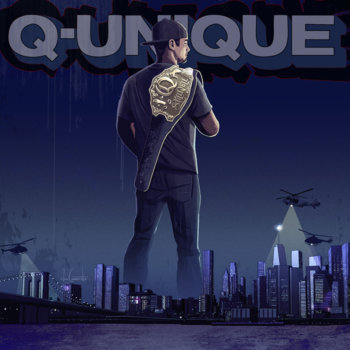
HHHeadz :Fieldy from Korn produced your entire "Pound for Pound" EP. How did that link happen, and what did working with him teach you about your own writing that you couldn't have learned from hip-hop producers alone?
Q-Unique: Fieldy just played bass on all the songs, I produced the entire album. Whats dope about working with Fieldy is that he's always been encouraging to me, he always believed in what I do and always had my back
PART 4: THE ROAD TO THE QR CODE
HHHeadz : Between 2023 and 2024 you dropped "The Legacy Series Vol. 1 & 2," "Pound for Pound," and "Royal Blood" with Jake Palumbo. That's a serious creative surge for someone this deep into a career. What was driving that output?
Q-Unique: It was the people around me pushing me to move forward along with me coming to an understanding that it's on me to move forward, and to keep the love and integrity in my music
HHHeadz : How did the collaboration with DJ Rhettmatic actually start? Was there a first conversation, a first beat, a specific moment when you both realized this wasn't going to be a one-off single but a full album?
Q-Unique: It started over a convo and a cup of coffee, which lead to Rhett giving me beats and me writing right away, I wrote Cypha Up first and then we got into a groove.
HHHeadz : Brooklyn and Cerritos aren't just different cities – they're different histories, different DJ cultures, different rap traditions. What did you have to unlearn or rethink to build a record with a West Coast turntablist of Rhettmatic's caliber?
Q-Unique: Nothing, I just have to be myself, if anything I dig Rhettmatic's vibe, he's a humble and patient dude and that inspires me to have some of that when I approach anything in this business.
PART 5: "THE QR CODE" – THE ALBUM

Q-Unique: QR Code stands for the code that both Q-Unique and Rhettmatic were raised on in the hip hop culture, we come from an era that had certain standards that you might not always see, everything from music to message to how we carry ourselves.
HHHeadz : The album is eleven tracks. Rhettmatic handles all production and cuts, Q you handle all the verses. Walk us through the actual creative workflow – did the beats come first, did you build together in the room, was it a back-and-forth over email?
Q-Unique: Beats come first, I vibe and write to them, then Rhett adds his input and ultimately Rhett sequenced the album and added vibes to it that gave it an identity
HHHeadz : You dropped "Cypha Up," "Fire Vision" with LMNO, and "It Only Leads the Way" as singles before the album. What was the strategy behind that rollout – and what did each of those cuts represent within the larger album picture?
Q-Unique: We just wanted to start the buzz, we know times are different and people don't listen to music the same way these days, so going one cut at a time was a way of slowly letting people know this was going to happen
HHHeadz : Pharoahe Monch shows up on "Comic Con Nerd Sh*t" – a heavyweight cosign from one of the most technical MCs in the history of the genre. How did that feature come together, and what did it mean to you both to get him on the record?
Q-Unique: Basically we had the idea, I wrote and recorded the verse and then we got at Pharoahe. It means a GREAT deal to us, he's someone that we hold in high regard and its still very surreal that he's a part of our journey.
HHHeadz : Is there a track on "The QR Code" that surprised you – something that went in a direction neither of you expected when you started building it?
Q-Unique: I would say the whole album was an unexpected blessing, we never had plans to work together, and we've known each other since the 90s. The whole album.
HHHeadz : Tonight is the listening party, tomorrow the album is out. What do you want people to walk away with after hearing this record for the first time?
Q-Unique: that we're making good music with good people and our intentions are pure when it comes to this culture.
PART 6: PAST, PRESENT, FUTURE
HHHeadz : On "I Seen" (from "The Mechanic," 2018) you laid out a rolling list of things you personally witnessed in hip-hop history – Crazy Legs in sheepskin boots, Nas with Main Source at the Wetlands, Big Pun with the Beatnuts, Roc Raida on the faders. Why is that kind of firsthand testimony important to you as a writer at this stage of your career?
Q-Unique: I wanted to share some of my experiences with my listeners, because even for me some of, if not this whole journey feels like a dream.

HHHeadz : The Arsonists reunited in 2018 for "Lost In The Fire" on Below System Records – all five original members back on record. Where does that crew sit in your life today, and is there more coming?
Q-Unique: We're just friends, at this point in time, I would say nothing is going to happen moving forward, but you can never say never.
HHHeadz : Three decades in the game, and you're still building at a high level. What's changed about your relationship to writing since the Bushwick Bomb Squad days – and what has stayed absolutely non-negotiable?
Q-Unique: I rediscovered my love for hip hop and I rediscovered my intention with Emcee'ing
HHHeadz : Last one – you've been through independent labels, indie rock labels, hip-hop labels, rock bands, EPs, full albums, reunions, solo work. If a 20-year-old MC walked up to you tonight at the listening party and asked what actually keeps a career alive for 30 years, what would you tell them?
Love.
No comments:
Post a Comment